




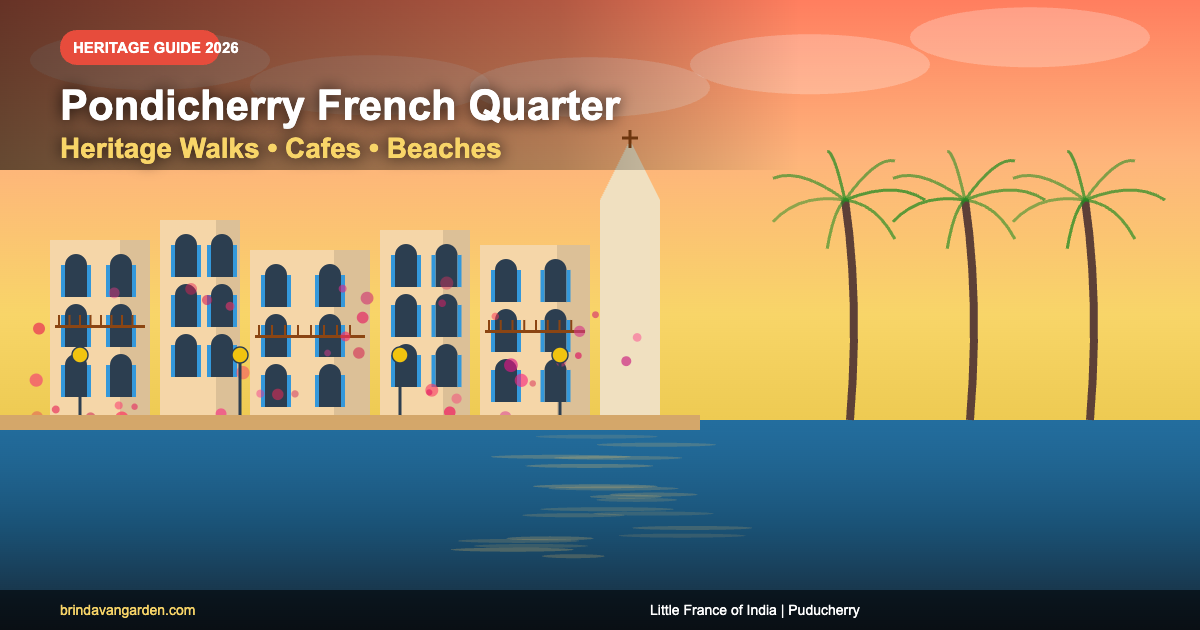
Pondicherry, the charming coastal union territory often called Little France of India, continues to captivate travelers in 2026 with its unique blend of French colonial architecture, Tamil heritage, spiritual retreats, and pristine beaches. The French Quarter, also known as White Town, remains the crown jewel of this seaside destination — a beautifully preserved neighborhood of mustard-yellow colonial buildings, bougainvillea-draped streets, boutique cafes, and art galleries that transport you to a bygone era.
Whether you are a history enthusiast, a foodie seeking the perfect croissant, a spiritual seeker drawn to Auroville and the Sri Aurobindo Ashram, or simply someone looking for a relaxing beach holiday with a cultural twist, this comprehensive guide covers everything you need for your Pondicherry trip in 2026.
Why Pondicherry Is Trending in 2026
Pondicherry has been steadily climbing the travel search charts, and 2026 marks a significant peak in its popularity. The rise of heritage tourism and slow travel trends has put Pondicherry firmly on the map for both domestic and international travelers. The Tamil Nadu government’s investment in heritage conservation, new boutique hotel openings in restored colonial mansions, and the growing food scene featuring Franco-Tamil fusion cuisine have all contributed to the surge in interest.
Solo travel, which has increased by nearly 67% in India in 2026, has made Pondicherry particularly popular among young professionals and digital nomads. The compact, walkable French Quarter, affordable accommodation, excellent cafe culture with free WiFi, and the nearby Auroville community make it an ideal base for remote workers seeking inspiration. Pondicherry also ranks among the top 10 most Instagram-worthy destinations in India for 2026, thanks to its photogenic streets and colorful architecture.
Exploring the French Quarter (White Town)
The French Quarter is a roughly 1-square-kilometer area bounded by the Bay of Bengal to the east and a canal to the west. This grid of tree-lined streets with French names like Rue de la Marine, Rue Dumas, and Rue Suffren is where most of Pondicherry’s colonial-era charm is concentrated. Walking or cycling through these streets is the best way to soak in the atmosphere.
Must-See Streets and Landmarks
Rue de la Marine is the main boulevard of the French Quarter, lined with heritage buildings that now house boutique hotels, art galleries, and souvenir shops. The street leads directly to the Promenade Beach and is perfect for an early morning or evening stroll. Notice the classic French architectural elements — arched doorways, wooden shutters, wrought-iron balconies, and terracotta-tiled roofs.
Rue Romain Rolland is home to some of the best-preserved colonial mansions in Pondicherry. The street has a quiet, residential feel with walls painted in signature Pondicherry yellow, white, and blue. Several heritage homestays are located here, offering guests an authentic colonial living experience.
The French War Memorial on Goubert Avenue is a striking monument commemorating French soldiers. It faces the sea and is illuminated beautifully at night, making it a popular spot for evening walks. Nearby, the Gandhi Statue on the promenade is one of Pondicherry’s most recognizable landmarks and a perfect starting point for exploring the waterfront.
Heritage Walking Tour Route
The best way to explore the French Quarter is on foot. Start your heritage walk at the Promenade Beach around 7 AM to catch the sunrise. Walk south along Goubert Avenue past the Gandhi Statue and the French War Memorial. Turn into Rue Dumas to see the Alliance Française and several restored colonial buildings. Continue to Rue Suffren where the famous Sri Aurobindo Ashram is located. End your walk at Rue de la Marine with a stop at one of the heritage cafes for a French breakfast.
The INTACH Heritage Walk, organized by the Indian National Trust for Art and Cultural Heritage, covers approximately 2 km of the French Quarter and is led by knowledgeable local guides. The walk happens every weekend morning and costs approximately ₹200 per person. It is highly recommended for first-time visitors who want to understand the history and architecture in depth.
Best Cafes and Restaurants in Pondicherry
Pondicherry’s food scene is one of its biggest attractions, offering a unique Franco-Tamil fusion cuisine that you will not find anywhere else in India. The French influence is evident in the abundance of bakeries, crepe stands, and bistros, while Tamil cuisine brings its own rich flavors of spice, coconut, and seafood.
Cafe des Arts on Rue Suffren is arguably the most photographed cafe in Pondicherry. Set in a beautiful yellow colonial building with an open courtyard, it serves excellent filter coffee, fresh crepes, and homemade cakes. The hand-painted walls and vintage decor make it a must-visit for Instagram enthusiasts. Expect to spend around ₹300–500 per person.
Baker Street is a beloved bakery chain with multiple outlets in the French Quarter. Their croissants, baguettes, and quiches are baked fresh daily using traditional French techniques. The chocolate croissants are legendary among regular visitors. Prices are very reasonable, with most items between ₹50–200.
Villa Shanti is a fine-dining restaurant set in a restored 18th-century Tamil-French mansion on Rue Suffren. The menu features innovative Franco-Tamil dishes like prawn curry with French herbs, duck confit with tamarind glaze, and Pondicherry-style bouillabaisse. A meal for two costs approximately ₹2,000–3,000 and is worth every rupee for a special dining experience.
Le Dupleix offers an elegant dining experience in one of Pondicherry’s most beautifully restored heritage hotels. The courtyard restaurant serves French and continental cuisine alongside select Indian dishes. Their Sunday brunch, priced at approximately ₹1,500 per person, is one of the best culinary experiences in Pondicherry.
Beaches of Pondicherry
Pondicherry offers several beautiful beaches, each with its own character and appeal.
Promenade Beach (Rock Beach) stretches 1.5 km along the Bay of Bengal and is Pondicherry’s most famous beach. While not ideal for swimming due to the rocky shoreline, it is perfect for sunrise walks, evening strolls, and people-watching. The wide promenade is lined with heritage buildings, street food vendors, and the iconic Gandhi statue. The beach is vehicle-free in the mornings, making it a peaceful experience.
Paradise Beach, located about 8 km from the town center, is accessible only by boat from Chunnambar Backwater. The 10-minute boat ride (₹300 round trip per person) adds to the adventure. The beach itself is a pristine stretch of golden sand with calm waters, making it perfect for swimming. Beach shacks serve fresh seafood and cold drinks. Visit on weekdays to avoid crowds.
Serenity Beach, about 10 km north of the French Quarter, has become Pondicherry’s surfing hub. Several surf schools operate here, offering lessons for beginners at around ₹1,500 for a 90-minute session. The beach has a relaxed, bohemian vibe with beachside cafes and yoga studios nearby. The sunrises here are spectacular and less crowded than Promenade Beach.
Auroville Beach, close to the Auroville community, is a quiet and serene stretch of coastline perfect for those seeking solitude. The beach is backed by casuarina groves and is rarely crowded. Local fishermen can sometimes be seen launching their traditional boats in the early morning.
Auroville: The City of Dawn
Auroville, located 12 km from Pondicherry, is one of the world’s most fascinating social experiments — an international township dedicated to human unity and sustainable living. Founded in 1968 by The Mother (Mirra Alfassa), Auroville is home to over 3,000 residents from more than 50 countries.
The Matrimandir, a stunning golden globe at the center of Auroville, is the township’s spiritual heart. Visitors can view it from a distance at the Matrimandir Viewing Point (free entry) or book an inner chamber meditation session in advance through the Auroville website. The chamber contains the largest optically perfect crystal globe in the world and offers a deeply meditative experience.
Beyond the Matrimandir, Auroville offers excellent organic cafes, handmade paper workshops, pottery studios, and sustainable fashion boutiques. The Auroville Bakery is famous for its whole-wheat bread and organic pastries. Svaram, a musical instrument workshop, creates beautiful handcrafted instruments that you can purchase as unique souvenirs. Plan to spend at least half a day exploring Auroville to appreciate its unique character.
Sri Aurobindo Ashram
The Sri Aurobindo Ashram, located on Rue de la Marine in the heart of the French Quarter, is one of India’s most renowned spiritual centers. Founded in 1926 by Sri Aurobindo and The Mother, the ashram attracts spiritual seekers from around the world. The main building houses the Samadhi — the burial site of Sri Aurobindo and The Mother — which is open to visitors for silent meditation throughout the day.
The ashram also runs several departments including a library, a playground with daily group exercises, a printing press, and various handicraft units. The Ashram Dining Hall serves simple vegetarian meals to visitors and residents (donation-based). Visiting the ashram is free, but visitors are expected to maintain silence and dress modestly.
Pondicherry Travel Budget for 2026
Pondicherry is one of the most affordable heritage destinations in South India. Here is a budget breakdown for 2026.
Budget travelers (₹2,000–4,000 per day) can find clean guesthouses and hostels in the Tamil Quarter starting from ₹800 per night. Eat at local Tamil restaurants and bakeries where a full meal costs ₹100–200. Rent a bicycle for ₹150 per day to explore the French Quarter. Free activities include beach walks, ashram visits, and heritage street exploration.
Mid-range travelers (₹5,000–10,000 per day) can stay at charming heritage boutique hotels in the French Quarter from ₹3,000 per night. Enjoy meals at popular cafes and restaurants, hire a scooter (₹400 per day) for exploring, and take guided heritage walks and Auroville tours.
Luxury travelers (₹12,000–25,000+ per day) can book premium heritage hotels like Palais de Mahe or La Villa, dine at fine restaurants like Villa Shanti and Le Dupleix, enjoy private heritage tours, and indulge in spa treatments at luxury resorts along the East Coast Road.
How to Reach Pondicherry
From Chennai: Pondicherry is approximately 150 km from Chennai, about a 3-hour drive along the scenic East Coast Road (ECR). SETC and private buses run frequently from Chennai Mofussil Bus Terminus (CMBT) with tickets from ₹200–500. The ECR route passes through Mahabalipuram, making it possible to combine both destinations in one trip.
From Bengaluru: The distance is about 310 km, roughly a 6-hour drive. Overnight Volvo buses from Bengaluru are the most popular option, with tickets from ₹600–1,200. The route passes through Vellore and Tindivanam.
By Air: Pondicherry Airport has limited flights, but Chennai International Airport is well-connected and just 3 hours away by road. Several taxi services and shuttle buses operate between Chennai Airport and Pondicherry.
By Train: Pondicherry Railway Station (PDY) is connected to Chennai, Villupuram, and other major cities. The Chennai–Pondicherry Express is a convenient daily train option with tickets starting from ₹100 in general class.
Essential Tips for Pondicherry Travelers
To make the most of your Pondicherry trip, here are some practical tips. The best time to visit is October to March when the weather is pleasant with temperatures between 22°C and 32°C. Avoid April to June when the heat can be intense. Rent a bicycle or scooter as the French Quarter is best explored on two wheels — the streets are narrow and parking is limited. Many heritage hotels and cafes in the French Quarter are cash-only, so carry sufficient cash. Wear modest clothing when visiting the ashram and temples. Book your Matrimandir inner chamber visit online at least 2–3 days in advance as slots fill up quickly. Try to visit the French Quarter early in the morning or during sunset for the best light and fewer crowds. Do not forget to explore the Tamil Quarter on the other side of the canal — it has excellent street food, colorful temples, and a vibrant local market.
Frequently Asked Questions
What is the best time to visit Pondicherry in 2026?
The best time to visit Pondicherry is October to March when temperatures range from 22°C to 32°C with low humidity. This period offers pleasant weather ideal for heritage walks, beach visits, and outdoor cafe hopping in the French Quarter.
Is Pondicherry expensive for tourists?
Pondicherry is quite affordable compared to other heritage destinations. Budget travelers can enjoy a comfortable trip for ₹2,000-4,000 per day including accommodation, food, and transport. Mid-range travelers should budget ₹5,000-10,000 per day for boutique hotel stays and dining at French cafes.
How many days are enough to explore Pondicherry?
A minimum of 2-3 days is recommended to explore the French Quarter, beaches, and Auroville. If you want to include surfing at Serenity Beach, heritage tours, and day trips to Mahabalipuram, plan for 4-5 days for a comprehensive experience.
Can I visit Matrimandir in Auroville without prior booking?
You can view the Matrimandir from the Viewing Point without booking (free entry). However, to visit the inner meditation chamber with its crystal globe, you must book online 2-3 days in advance through the official Auroville website as slots are limited.
How do I get from Chennai to Pondicherry?
The easiest way is by road via the scenic East Coast Road (ECR), which takes about 3 hours. SETC buses run frequently from Chennai CMBT with tickets from ₹200-500. You can also take the daily Chennai-Pondicherry Express train or hire a private taxi for approximately ₹3,000-4,000.

My name is Samar. I enjoy writing and blogging about gardens. In this website, I share information and upload blogs about beautiful Brindavan Garden.