





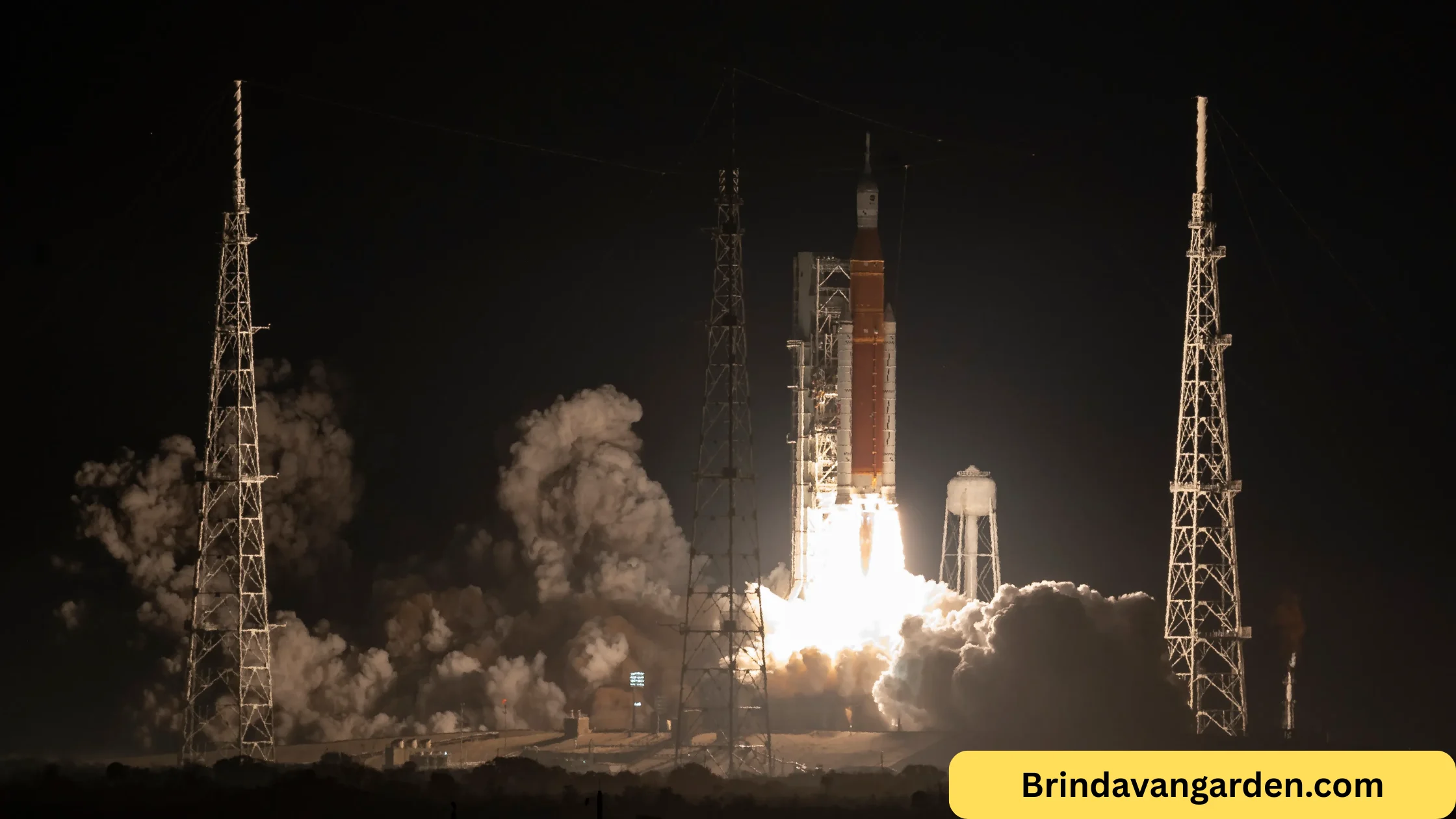
Florida, USA — In what could become one of the most significant milestones in space exploration, NASA’s Artemis II mission is on the cusp of launching its powerful Space Launch System (SLS) rocket toward the Moon, marking humanity’s return to crewed lunar missions after more than half a century. The mission’s progress this week has captured global attention as engineers conduct vital pre-launch tests to ensure mission success.
🛰️ Wet Dress Rehearsal Underway: Final Test Before Launch
NASA has begun the “wet dress rehearsal” — a full practice countdown that simulates the fueling and launch sequence of the Artemis II rocket at the Kennedy Space Center in Florida. This two-day critical test involves loading the SLS vehicle with its cryogenic propellants, including more than 700,000 gallons of super-cold fuel, and practicing all major launch procedures just like on the real day.
As of Tuesday, February 3, engineers successfully completed filling the rocket’s core stage with liquid hydrogen and oxygen, and are now maintaining tank conditions as they proceed through the countdown simulation. Closeout crews have been deployed to secure the Orion crew capsule for launch readiness.
The results of this rehearsal will determine whether NASA can proceed with the planned launch opportunities beginning February 8, 2026, or if further adjustments will be needed.
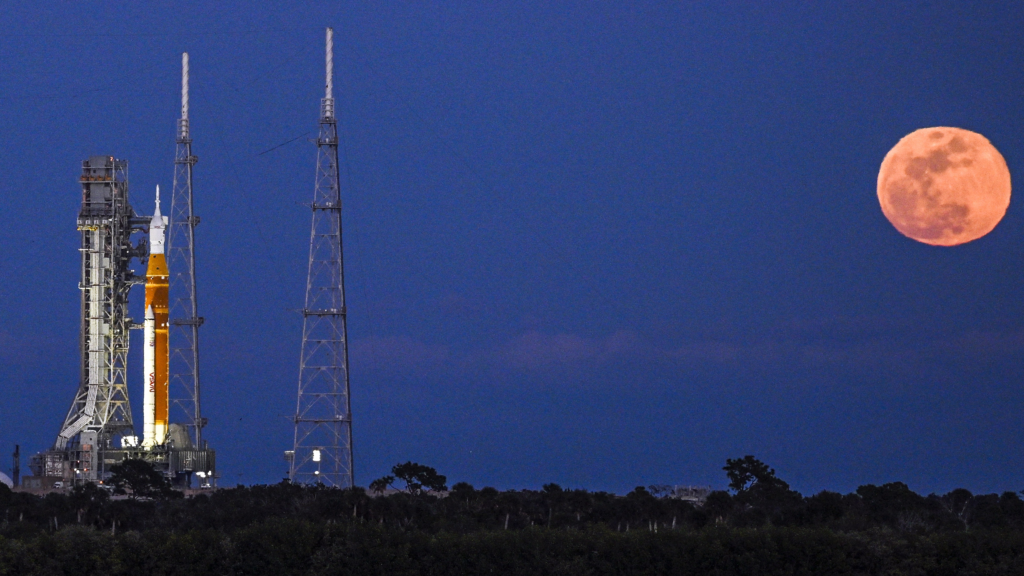
❄️ Weather & Technical Challenges Delay Launch Window
While the global space community watches with anticipation, Artemis II has already faced setbacks. Unusual cold weather and strong winds at Cape Canaveral led to the postponement of earlier fueling attempts and shifted the critical test timeline. Engineers reported temporary halts during fueling due to weather-related equipment constraints, but teams are pressing forward carefully.
Additionally, reports from mission rehearsals highlight minor technical hurdles, including hydrogen fuel leaks that required troubleshooting during simulated countdowns. Each step of these tests is closely monitored because ensuring safety and reliability is paramount, especially for a mission that will carry astronauts around the Moon.
👩🚀 Meet the Artemis II Astronaut Crew
The Artemis II mission will carry four astronauts on a nearly 10-day lunar flyby, a journey that will take them farther from Earth than any humans have traveled since the Apollo era:
- Reid Wiseman (Commander) — NASA
- Victor Glover (Pilot) — NASA
- Christina Koch (Mission Specialist) — NASA
- Jeremy Hansen (Mission Specialist) — Canadian Space Agency (CSA)
This international and diverse crew stands out in history: Glover will be the first person of color, Koch the first woman, and Hansen the first non-American astronaut to fly in a lunar mission.
🌕 What Artemis II Means for the Future of Space
If all goes according to plan, the Artemis II rockets will lift off from Launch Complex 39B at the Kennedy Space Center, following the exact flight trajectory essential for testing NASA’s deep space travel capabilities. The mission’s primary goal is not to land on the lunar surface, but to orbit the Moon and return safely to Earth, evaluating the performance of the SLS rocket and the Orion spacecraft with a live crew.
Successful completion of Artemis II will clear the way for Artemis III, which aims to land astronauts on the lunar surface as early as 2028, underlining NASA’s ambition to build a sustainable human presence on the Moon and pave the path for future Mars exploration.
📅 Launch Window & Next Milestones
Current official timelines indicate a series of possible launch windows in early to mid-February 2026. The earliest opportunity might be February 8, with additional chances on February 10 and 11 — weather and technical reviews permitting.
NASA will discuss early results from the wet dress rehearsal in a public briefing, where mission leaders will provide updates on rocket readiness and finalize plans for the crew’s departure to the launch site later this week.
Conclusion:
The Artemis II mission represents a bold leap forward in human spaceflight. As NASA completes the final countdown rehearsals and prepares for a crewed lunar journey unseen since the Apollo era, the world watches eagerly. Despite weather delays and technical hurdles, engineers are working around the clock to give humanity another chance to reach for the Moon — and beyond.

My name is Samar. I enjoy writing and blogging about gardens. In this website, I share information and upload blogs about beautiful Brindavan Garden.